One of the last things one wants to hear, when one has undergone some misfortune or difficulty, is the injunction to count one’s blessings. Think how well off you really are, someone inevitably tells you. Remember your advantages, the voice exhorts, your resources, your talents. But this individualist, go-get-’em cheer rings hollow in times of widespread deprivation, when “misfortune” is not individual bad luck but a structural unhappiness shared by many.
Going Negative, or, Why Not Jeeves?
What use could there be for negative evidence in literary scholarship?
We all love to see evidence in argumentative writing. We drill the necessity of evidence into our students; and research stands or falls on the quality of evidence used to support the researcher’s claims. In my own work I am a compulsive example-giver, never happier than when typing in a block quote, or reeling off names of authors, or works, that fit into some scheme I am making a claim for. Lately, though, I have wondered how our taste for evidence is shaped by confirmation bias : the very strong cognitive preference to look for, to notice—and to present in scholarship—only evidence that supports our larger claims and pre-existing ideas. In (my idealization of) scientific experiments, the practice of controls is supposed to guard against this bias.1 What would be the controls of literary scholarship? How would we actively seek out potentially discomfirming evidence? And—here’s the kicker—how can we present the confirmatory value of not finding it?2
Fictions of Autonomy
Modernism from Wilde to de Man
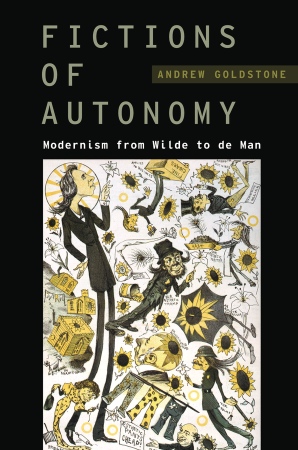

Oxford University Press, January 2013
Modernist Literature & Culture Series
Order from OUP or amazon or Powell’s
Available on Oxford Scholarship Online
No aspect of modernist literature has attracted more passionate defenses, or more furious denunciations, than its affinity for the idea of autonomy. A belief in art as a law unto itself is central to the work of many writers from the late nineteenth century to the present. But is this belief just a way of denying art’s social contexts, its roots in the lives of its creators, its political and ethical obligations?